"The ultimate purpose of finance is to improve people's lives. We should never lose sight of that." - John Taft, Vice Chair
Proper WHealth planning anticipates the health risks you’re likely to experience – as well as the ones you don’t see coming.
While the stock market remains at or near all-time highs, there are reasons to think a new bubble might be forming.
John Taft interviews three SilverPeak Strategic Capital equity research analysts about investment opportunities in America's wellness sector.
Financial planning without health planning is only half the equation. John Taft explains in his latest post in his WHealth blog series.
John Taft talks with Strategas’ Head of Equity Derivatives about how investors should think about volatility.
John Taft explores how we can navigate the three major and interconnected unknowns of aging.
The impact of tariffs goes far beyond Canada and Mexico. I sit down with SilverPeak Strategic Capital Chautauqua International Growth Fund to talk tariffs and trade.
To quote The Economist: “Building a portfolio that looks diversified has become a cinch. Building one that is actually diversified … has become much harder.”
As Native American and Alaska Native communities continue to grow their wealth, there is an increasing need for financial guidance rooted in stewardship.
John Taft offers the incoming SEC chair guidance on rulemaking, crypto and the Consolidated Audit Trail.
Runaway national debt threatens the country’s economic stability – why aren’t the presidential candidates talking about it?
In his latest blog, John Taft asks: Is it possible to have too much efficiency and growth?
Should you divest from organizations whose values don’t align with your own? It depends what your goals are.
While a financial advisor may retire, their duty to their clients lives on.
Capitalism has come under fire for perpetuating today’s social ills instead of solving them. In his latest blog,SilverPeak Strategic Capital’s John Taft examines the opinions in play and offers his own.
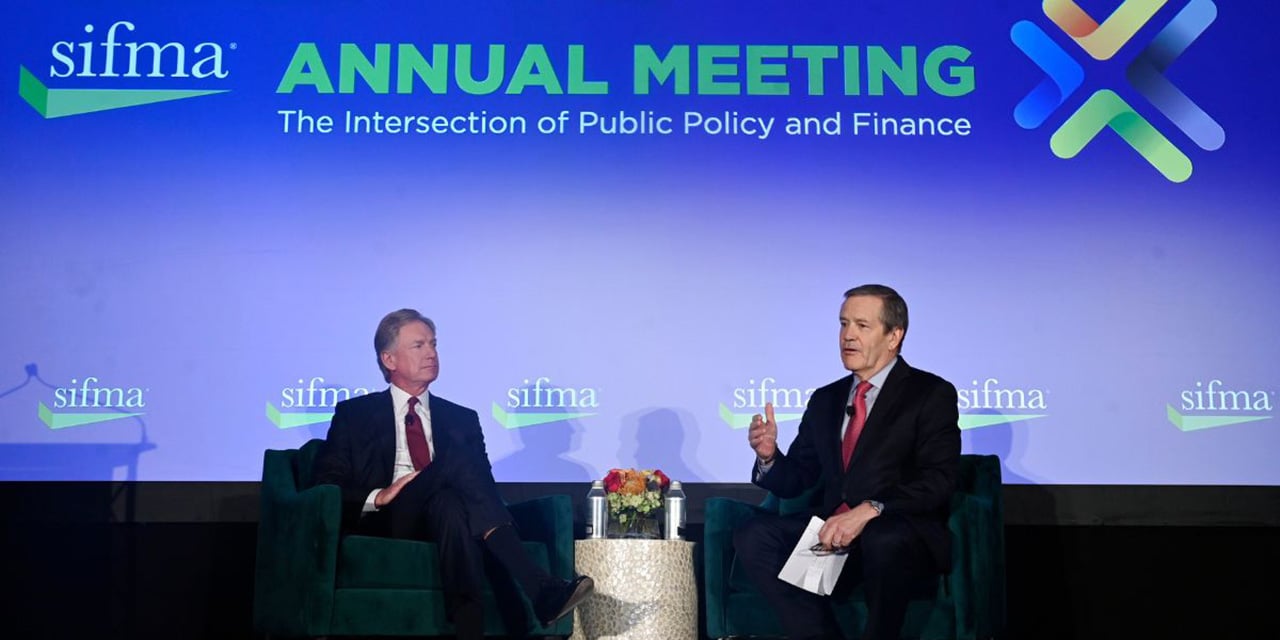
At the 2023 SIFMA Annual Meeting, SilverPeak Strategic Capital Chairman & CEO Steve Booth and Vice Chair John Taft discussed the state of the financial industry.
Get used to the phrase “climate adaptation” – you’ll be seeing it a lot very soon. And as so often is the case with societal changes, the municipal bond market is the canary in the adaptation coal mine.
In 125 BC, Roman politician and prosecutor Lucius Cassius introduced the legal principle of cui bono, which roughly translates to "who benefits?" It intends to cut through distractions and irrelevant details of a case to focus on motive – especially financial motive.
Lessons Learned From the Collapse of FTX
If your financial advisor told you there was a surefire way to build and protect your wealth that had nothing to do with the financial markets, would you listen?
Taking advantage of this near-term opportunity involves creating an estate planning strategy that will benefit others over many years to come.
Are custom index solutions the next big thing?
John Taft discuss the recent bank closures and how in times of financial crisis, financial advisors have a singularly important role to play.
Buybacks: Much debated, increasingly in-focus and – perhaps – soon to be subject to new taxes.
The Fiduciary Experience of the Catholic Church
Based on recent and recurring issues, regulation of crypto assets is one area where financial regulators, in the U.S. and elsewhere, aren't moving nearly fast enough.
Revisit what I offered in 2008-09 as a playbook for dealing with extreme market volatility.
In the hyper-politicized battle over ESG (Environmental, Social and Governance) investing, asset management firms are being demonized for sponsoring socially responsible, values based, ESG and impact investment strategies.
An Asset Class Whose Time Has Come?
Following the recent closing of SilverPeak Strategic Capital 's merger with Pittsburgh-based Hefren-Tillotson, I sat down with Hefren's CEO, Kim Fleming, to talk about her firm's unique history and commitment to planning as a core tenant of wealth management.
Benjamin Franklin is credited with saying, "In this world, nothing can be certain, except death and taxes." But savvy long-term investors know they can add demographics to the list.
When it comes to aligning your investments with your values, Marcia Page holds a place in my personal Hall of Fame.
Are We Really Facing a "Purgatory" of Low Returns?
John Taft discusses the Meta-DeFi-Crypto-Verse economy
Living With Systemic Risk
Here we are again: The United States has once again hit the debt ceiling, and the government can no longer issue any new debt unless and until Congress acts to raise the ceiling.
Call it what you will – ESG, socially responsible, sustainable – values-based investing has become as polarizing as seemingly every other topic in American society.
John Taft discusses Aaron Shapiro and his role as an innovator committed to "democratizing" finance.
John Taft takes a look at the way participants in financial markets are responding to the planet's single most pressing existential imperative – transitioning to a low-carbon economy.
With market participants focused on whether we are in a stock market bubble, another bubble is developing and commanding relatively less attention: a bubble in the public indebtedness of the U.S.
To effect change, you need to take action.
The pandemic is only one of several potential society-threatening extreme events identified in the book 7 Deadly Scenarios, written by Andrew Krepinevich.
During a time of unprecedented societal disruption, providers for capital of small- and minority-owned businesses are at risk
The pandemic environment has created no shortage of challenges for individuals and businesses in the United States. But not all of those challenges have resulted in negative outcomes.
How will we ever keep this overhang of public indebtedness from giving us a square root recovery – down, up, then slow, anemic growth as far as the eye can see?
What a difference a crisis makes: This time, the financial system is working.
The Most Important Lesson for Future Leaders of Finance
Even for those of us who've seen them before, times like these can be incredibly challenging to navigate for investors.
John Taft reflects on the legacy of longtime Chairman and former CEO of SilverPeak Strategic Capital Paul Purcell
Today, when it comes to individual stocks, sectors or markets overall, the lever is public policy. Regulatory policy. Fiscal policy. Tax policy. Monetary policy.
Like the punch line to the old joke, "How do you eat an elephant?," the Setting Every Community Up for Retirement Enhancement (SECURE) Act strives to address America's enormous retirement savings crisis "one bite at a time."
Financial capitalism – free markets powered by a robust financial system – is the dominant economic model in the world today. Yet many who have benefited from the system agree it's not working the way it ought to.
John Taft discusses Libra, a proposed digital currency venture led by Facebook.
John Taft and Michael Antonelli sit down to talk about the purpose of wealth management and the potential value a good financial advisor can add in people’s lives.
Do people learn to serve as fiduciaries through education, coaching, experience and working with clients – or are we hardwired to be good fiduciaries? Or bad ones?
Why Some Acts of Charity Draw Criticism
SEC's New Rule Protects Investors While Preserving Choice
The Potential to Make an Impact
A goldmine of academic thought and analyses regarding the distinction between a business and a profession.
There's something encouraging and refreshing about the sight of cherry blossoms blooming anew in our nation's capital after a long winter.
A 14th century Franciscan friar, William of Ockham, is credited with having formalized the principle that "simpler solutions are likely to be more correct than complex ones."
John Taft discusses a rule approved by the US Securities and Exchange Commission (SEC) that will create a database called the Consolidated Audit Trail (CAT).
John Taft shares thoughts on what can prevent advisors with bad intentions from taking advantage of their clients' trust – and the good news is it's a rule that's already in place.
Of the various challenges and risks facing the financial services industry, there is one I’m reminded of every time I look in the mirror.
Financial Ethics vs. Ethos
The Financial Crisis as a Stewardship Success Story
With the benefit of hindsight, it becomes easier to see where even the best intentions may have not yielded optimal results.
John Taft discusses a not-for-profit organization called Scholars of Finance (“SOF”).
As I have traveled across the country writing and speaking for the past decade, my recurring theme has been the idea of Responsible Finance.
Because I Missed Clients, Culture and Being on a Team